Global Health Funding Crisis: Who Pays the Price?

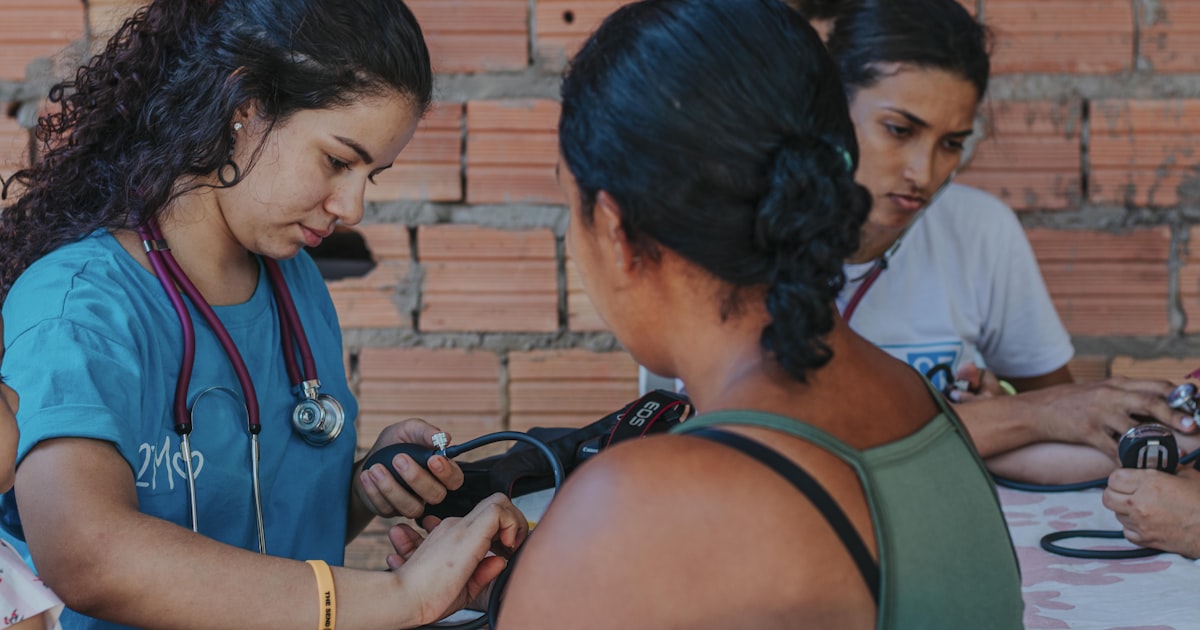
What if life-saving care suddenly became out of reach for your loved ones abroad?
Imagine a world where essential vaccines or critical medicines for your family in a developing country suddenly become harder to get. This isn't a hypothetical scenario; it's the stark reality emerging as global health funding faces unprecedented cuts, threatening decades of hard-won progress against diseases like AIDS, tuberculosis, and malaria.
⚡ Key Takeaways
- Global health funding has seen significant cuts, with major donors like the U.S. reducing their contributions.
- This means less money for crucial programs fighting infectious diseases and strengthening healthcare systems in many developing nations.
- The WHO's ambitious 2025-2028 plan to save 40 million lives faces a massive $7 billion funding gap.
- Vulnerable countries, especially in Africa and Asia, are disproportionately affected, risking reversals in health progress and increased suffering.
The Quiet Cuts That Could Cost Lives
For years, international aid has been a lifeline for public health initiatives worldwide. But that landscape is changing dramatically. Development assistance for health (DAH) plummeted by 21% between 2024 and 2025, largely driven by a staggering 67% drop in U.S. financing – that's over $9 billion. This isn't just about numbers; it's about real people losing access to care.
Organizations like The Global Fund to Fight AIDS, Tuberculosis, and Malaria are seeing their allocations shrink, with some countries facing cuts as high as 79%. While some of these reductions are part of a planned transition for upper-middle-income countries, lower-middle-income nations like India are also seeing significant decreases, with a 40% cut in its allocation.
WHO's Big Vision, Bigger Funding Gap
Amidst these cuts, the World Health Organization (WHO) has laid out an ambitious plan for 2025-2028, known as GPW-14. Their vision? To save 40 million lives by promoting health, strengthening healthcare systems, and protecting against emergencies. This includes tackling critical issues like climate change's impact on health, preventing disease, and advancing universal health coverage.
"The climate has fundamentally changed," says Joseph Dieleman, who leads the Institute for Health Metrics and Evaluation (IHME)'s health resource tracking team.
But here's the part nobody's talking about enough: this vital four-year plan has an $11.1 billion price tag, and a staggering $7 billion of that still needs to be raised. Without this flexible funding, the WHO's capacity to deliver high-impact support to countries will be severely hampered.
Why This Hits Vulnerable Communities Hardest
When global health funding shrinks, it's the most vulnerable who feel it first and worst. Countries with weak health infrastructure, often in developing regions, are the least equipped to cope without assistance. We're talking about communities where preventable diseases like malaria are still a major threat, and where access to basic healthcare can mean the difference between life and death.
Picture this: a clinic in a remote village, already struggling with limited resources, now faces further cuts to its medicine supply or staff. This isn't just a setback; it's a potential reversal of progress that took years, even decades, to achieve. The World Health Statistics 2026 report already shows that while there have been improvements, progress is uneven, slowing, and in some areas, reversing.
What This Means for Your Family's Future
These funding shifts aren't just abstract policy changes; they have real-world consequences for families, including Egyptian-Americans with ties to their home country or other nations reliant on global health aid. Less funding means a higher risk of disease outbreaks, reduced access to life-saving treatments, and a greater strain on already fragile healthcare systems.
The real question is, as global health priorities shift and funding tightens, how will we ensure that no one is left behind? It's a collective challenge that demands our attention and a renewed commitment to global health equity.


